
Container Shipping Guide: Types, Sizes, FCL, LCL & Shipping Basics
Container Shipping Guide
Containers are an essential part of international shipping. They allow businesses to transport commercial goods safely and efficiently between ports and across different countries.
Choosing the right container depends on the type, size, weight, dimensions, and handling requirements of the cargo. Businesses also need to understand the difference between Full Container Load (FCL) and Less than Container Load (LCL) before arranging an international shipment.
This guide explains common container types and sizes, FCL and LCL shipping, cargo loading considerations, and factors businesses should consider when selecting a container.
What Is a Shipping Container?
A shipping container is a standardized cargo unit designed to transport goods by sea, and in many cases can also be moved by road or rail without unloading the cargo.
Standardized container dimensions make it easier to transfer cargo between different modes of transportation throughout the logistics process.
Containers are commonly used for:
- General commercial goods
- Machinery and equipment
- Automotive components
- Consumer products
- Raw Materials
- Retail Goods
- Industrial Materials
The appropriate container depends on the characteristics and requirements of the cargo.

Common Container Sizes
Shipping containers are available in several standard sizes.
20-Foot Container
A 20-foot container is commonly used for smaller or heavier shipments where the cargo volume does not require a larger container.
It can be suitable for dense cargo that reaches its practical weight limit before filling the available container space.
40-Foot Container
A 40-foot container provides significantly more internal space than a 20-foot container and is commonly used for larger-volume commercial shipments.It may be suitable for businesses transporting larger quantities of packaged goods, equipment, or other general cargo.
40-Foot High Cube Container
A 40-foot High Cube container provides additional internal height compared with a standard 40-foot container.The extra vertical space can be useful for lightweight cargo with a relatively high volume.Container capacity and weight limits vary depending on container specifications, shipping lines, ports, and applicable regulations. Businesses should confirm the exact specifications before booking.
Common Types of Shipping Containers
Shipping containers are available in several standard sizes.
Dry Container
Dry containers are the most common type of shipping container and are generally used for non-temperature-sensitive cargo.They are suitable for many types of commercial and industrial products.
High Cube Container
High Cube containers provide additional internal height and can be useful when cargo requires more vertical space.They are commonly available in 40-foot configurations.
Reefer Container
Refrigerated containers, commonly known as reefers, are designed to transport temperature-sensitive cargo.They can be used for products that require controlled temperatures during transportation.
Open Top Container
Open Top containers have a removable or open roof design that can make loading oversized or tall cargo easier.They may be suitable for cargo that cannot be loaded through a standard container door.
Flat Rack Container
Flat Rack containers are designed for oversized, heavy, or irregularly shaped cargo that may not fit inside a standard enclosed container.They are commonly considered for machinery, industrial equipment, and other specialized cargo.
What Is FCL Shipping?
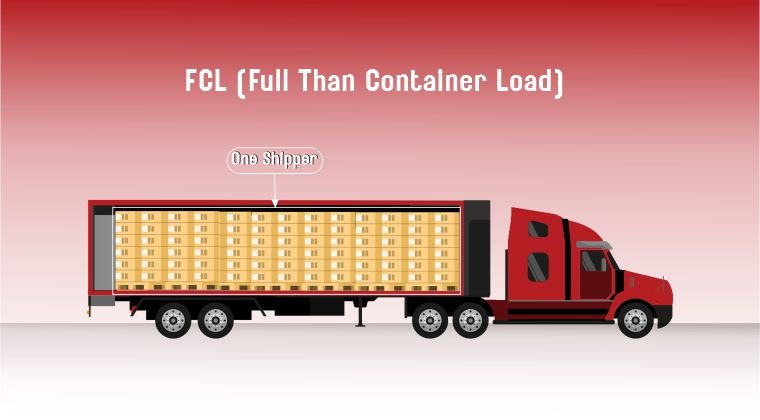
FCL stands for Full Container Load.
With FCL shipping, a shipper uses a dedicated container for their cargo. The container is generally loaded at the origin and transported to the destination without being consolidated with cargo from other shippers.
FCL can be suitable when:
- The shipment has enough volume to justify a full container.
- Cargo requires dedicated container space.
- The shipper wants to minimize cargo consolidation.
- The goods require additional control during transportation.
- The cargo is large, heavy, or sensitive.
FCL does not necessarily mean that the container must be completely filled. A business can use FCL even when the cargo does not occupy every available space in the container.
What Is LCL Shipping?
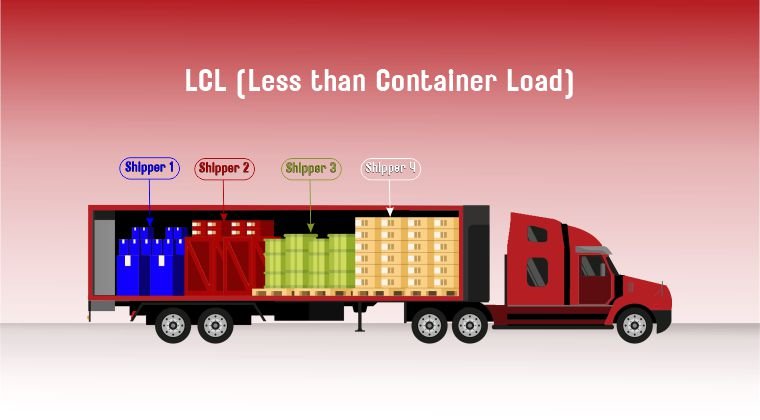
LCL stands for Less than Container Load.
With LCL shipping, cargo from multiple shippers is consolidated into one container.
LCL can be useful when the shipment is too small to justify booking an entire container.
It may be suitable for:
- Smaller commercial shipments
- Samples and limited-volume cargo
- Businesses with lower shipping frequency
- Cargo that does not require a dedicated container
Because LCL cargo is consolidated with other shipments, the cargo may go through additional handling during the consolidation and deconsolidation process.
FCL vs LCL: Which One Should You Choose?
The choice between FCL and LCL depends on several factors.
| Factor | FCL | LCL |
|---|---|---|
| Container use | Dedicated container | Shared container |
| Cargo volume | Larger shipments | Smaller shipments |
| Cargo handling | Generally less consolidation handling | More consolidation handling |
| Pricing basis | Container-based | Often based on cargo volume/weight |
| Suitable for | Larger commercial shipments | Smaller shipments |
There is no universal volume threshold that makes one option automatically better. Businesses should compare the total cost, cargo characteristics, handling requirements, and delivery timeline.
Air Freight Documents
Before booking a container, consider the following factors.
Cargo Dimension
Measure the length, width, and height of the cargo accurately.Oversized cargo may require a specialized container rather than a standard dry container.
Cargo Weight
Check the total cargo weight and applicable container and transportation limits.Heavy cargo may reach weight restrictions before the available container space is fully utilized.
Cargo Characteristic
Consider whether the goods require temperature control, additional protection, special loading methods, or other handling requirements.
Loading Methode
Some cargo may require forklifts, cranes, ramps, or other specialized equipment.The loading method can influence the most appropriate container type.
Destination Req.
Container availability, port restrictions, local regulations, and inland transportation limitations can vary by destination.These factors should be checked before confirming the shipment.
Container Loading Considerations
Proper loading is important for cargo safety during transportation.
Businesses should consider:
- Weight distribution
- Cargo securing
- Packaging quality
- Protection against movement
- Moisture protection when required
- Proper labeling
- Safe access for loading and unloading
- Compliance with applicable cargo regulations
Cargo should be loaded and secured according to its characteristics and the applicable transportation requirements.
What Affects Container Shipping Costs?
Container shipping costs can depend on multiple factors, including:
- Container Size
- Container Type
- Origin and destination
- Shipping route
- FCL or LCL arrangement
- Cargo volume and weight
- Port charges
- Terminal handling
- Documentation
- Customs duties and taxes
- Inland transportation
- Storage or additional handling
- Applicable carrier surcharges
For this reason, the container itself is only one part of the overall international shipping cost.
Container Shipping and Inland Transport
After a container arrives at the destination port, it usually needs to be transported to a warehouse, factory, distribution center, or other final location.
This makes inland transportation an important part of container logistics.
Depending on the shipment, transportation may involve trucks or other suitable vehicles for moving the container between the port and final destination.
Businesses should therefore consider the complete logistics chain rather than focusing only on the ocean freight portion.
Tips for Businesses Shipping Containers Internationally
Before arranging a container shipment:
- Measure and weigh the cargo accurately.
- Determine whether FCL or LCL is more appropriate.
- Select a suitable container type and size.
- Check destination requirements.
- Prepare the required shipping documents.
- Confirm customs requirements.
- Plan container loading and cargo securing.
- Consider insurance for appropriate shipments.
- Calculate port and inland transportation charges.
- Allow sufficient time for customs and port operations.
Container Shipping Services with Nagoya Trans Logistik
Nagoya Trans Logistik supports businesses with international container shipping requirements as part of its freight forwarding and logistics services.
Depending on the shipment requirements, logistics coordination can include sea freight arrangements, FCL and LCL shipping, documentation support, customs clearance, and inland transportation.
Explore our Sea Freight, Customs Clearance, and Inland Transport services to learn more about the different stages of container logistics.
For assistance with an international container shipment, contact Nagoya Trans Logistik with your cargo details, origin, destination, and preferred shipping schedule.